Trust as an engineering method
Layer deterministic tests, behavioral evals, trace review, and repeated hardening loops. The goal is not a permanent benchmark claim; it is a system that makes failures visible and repairable.

AI Product & Systems
A working archive of production AI products, agentic platforms, and operating systems.
Product notes, systems work, and practical AI research across agentic platforms, semantic layers, memory, and enterprise adoption.
Data
semantic contracts
Agents
orchestration
Memory
context graph
Trust
evaluation loop
Latest writing
Transition pattern
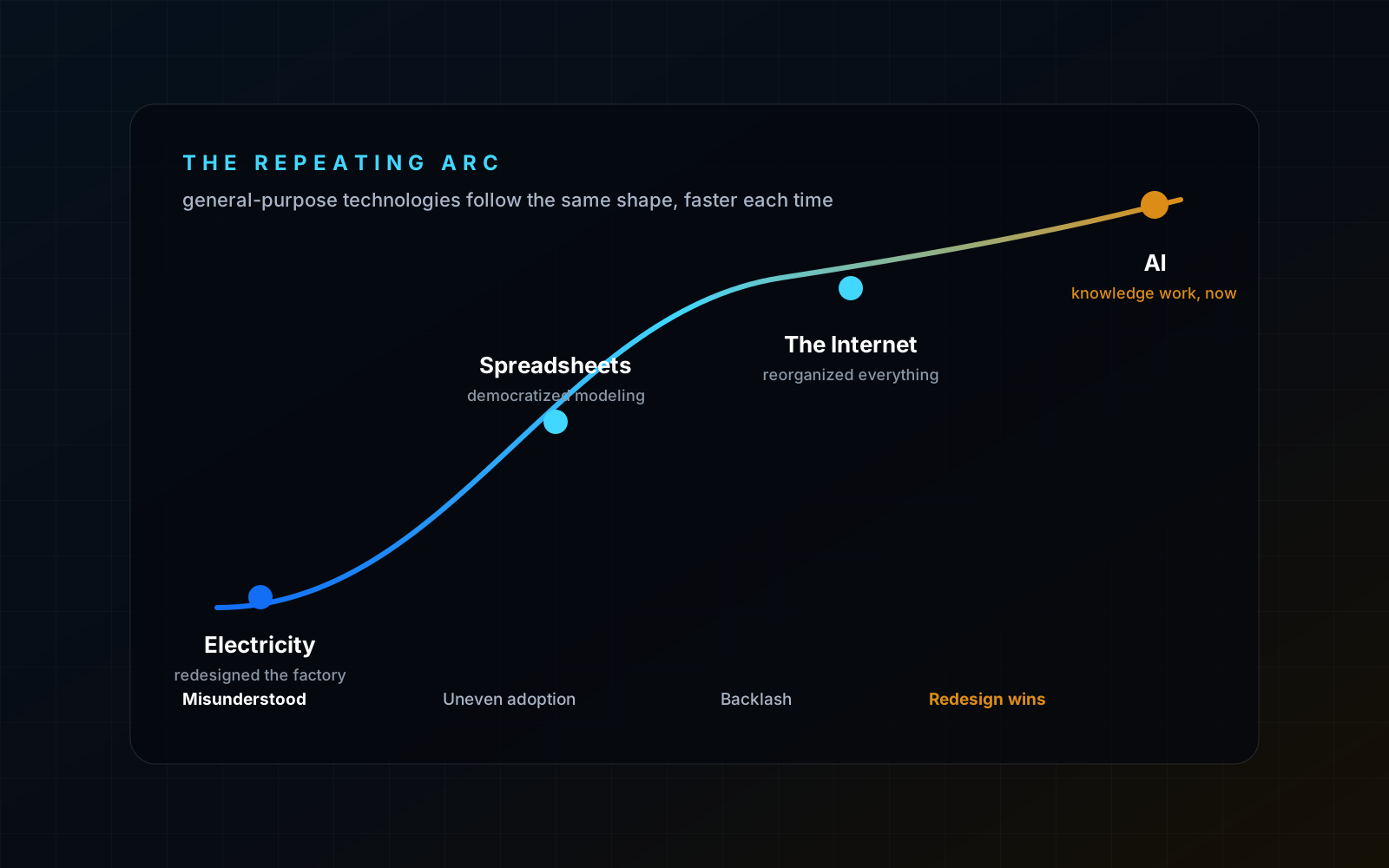
Major technologies get misread at the start, adopted unevenly, governed late, and only pay off once the work is rebuilt around them. AI is running that same arc on fast-forward. Treat it as an operating-model change, not a tool rollout.
Productivity lag
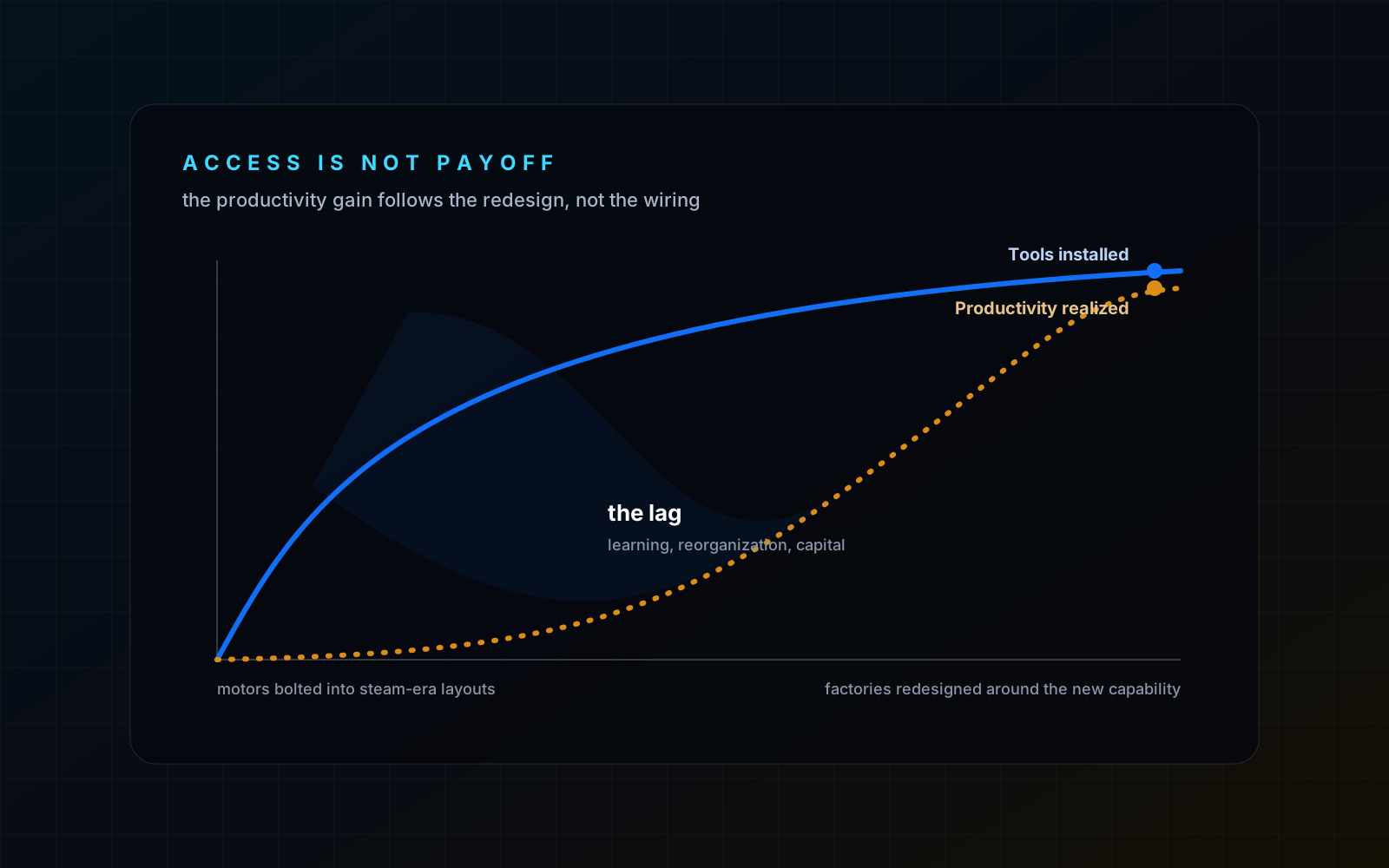
When factories first electrified, they bolted motors into steam-era layouts and saw almost nothing. The gains showed up only after the work itself was redesigned. Expect the same gap between AI access and AI productivity, and meet it with disciplined learning instead of waiting.
Democratized power
VisiCalc and Lotus 1-2-3 did more than speed up arithmetic. They changed who could model a business at all, and they buried assumptions deep inside formulas. AI democratizes analytical production the same way, and it makes shaky reasoning sound fluent. The fix is review that scales with the new producers.
Governance lag
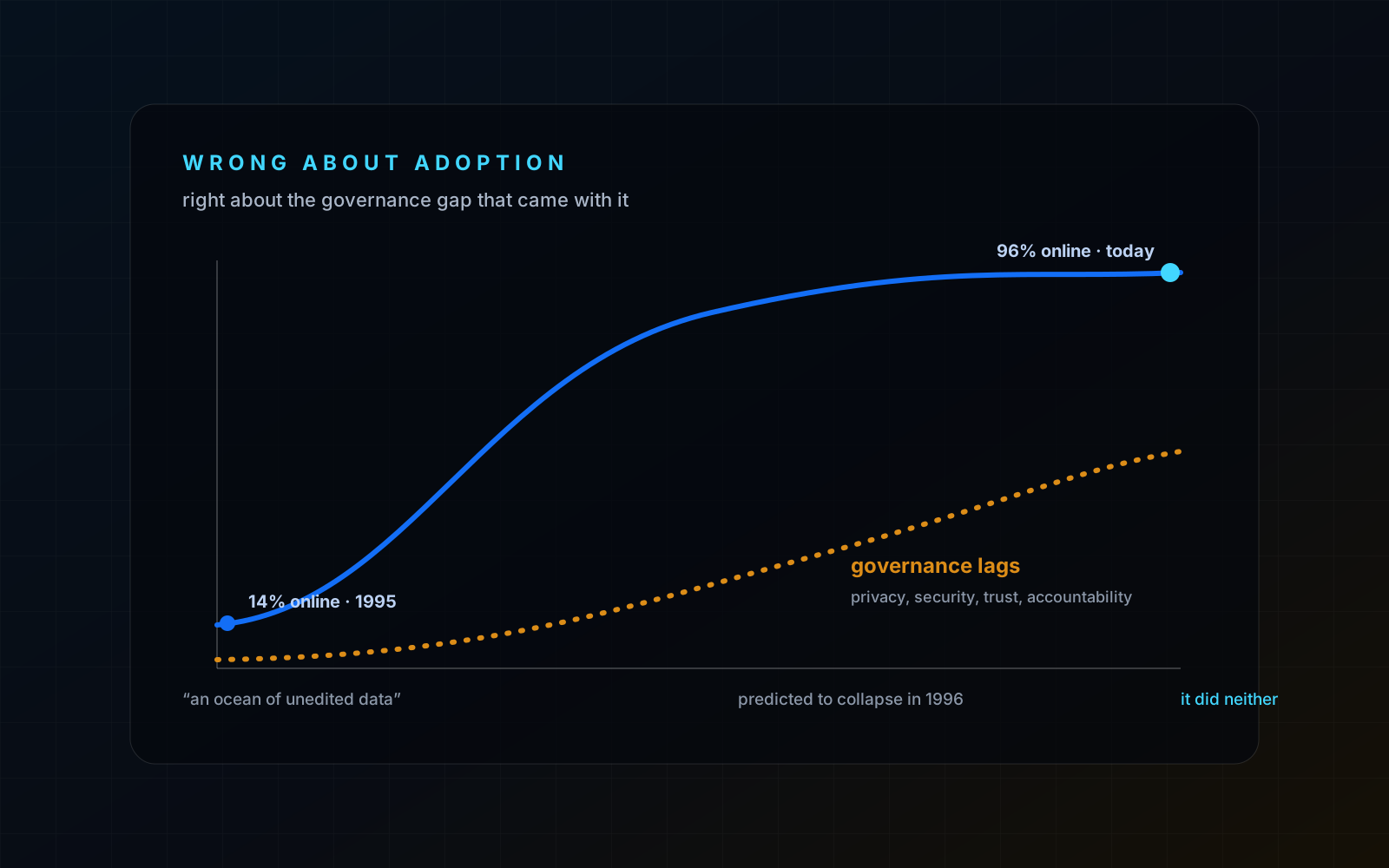
In 1995, 14 percent of US adults were online, and famous voices predicted the whole thing would collapse. They were wrong about how far it would spread and often right about the institutional messes that uncontrolled adoption would cause. Pull those two questions apart for AI: will it spread, and what does safe use actually require?
Common patterns
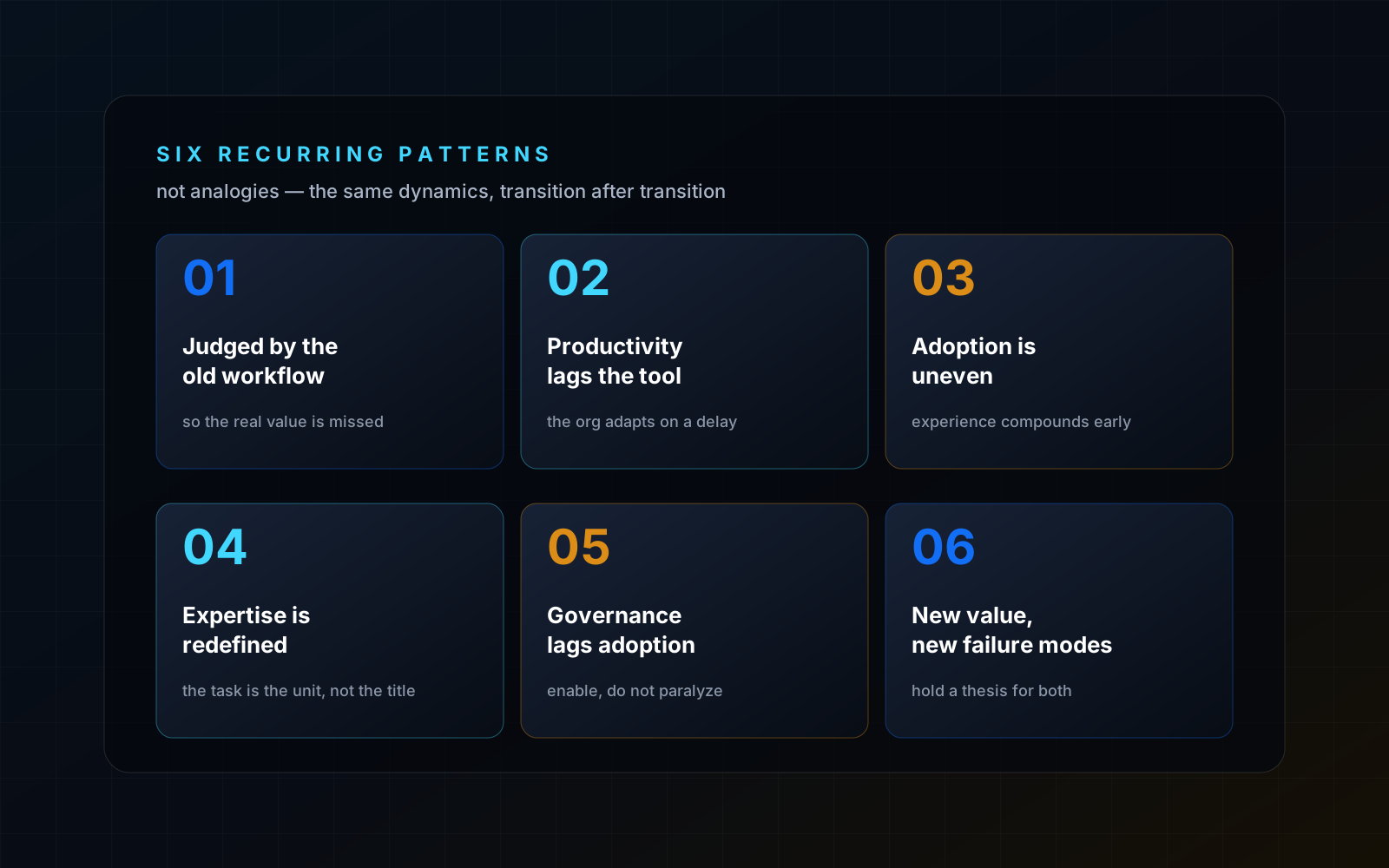
Across electricity, spreadsheets, computers, and the internet, the same six organizational dynamics decide whether a technology becomes an advantage or an unmanaged risk. Here is each one, and what it asks of anyone preparing for AI.
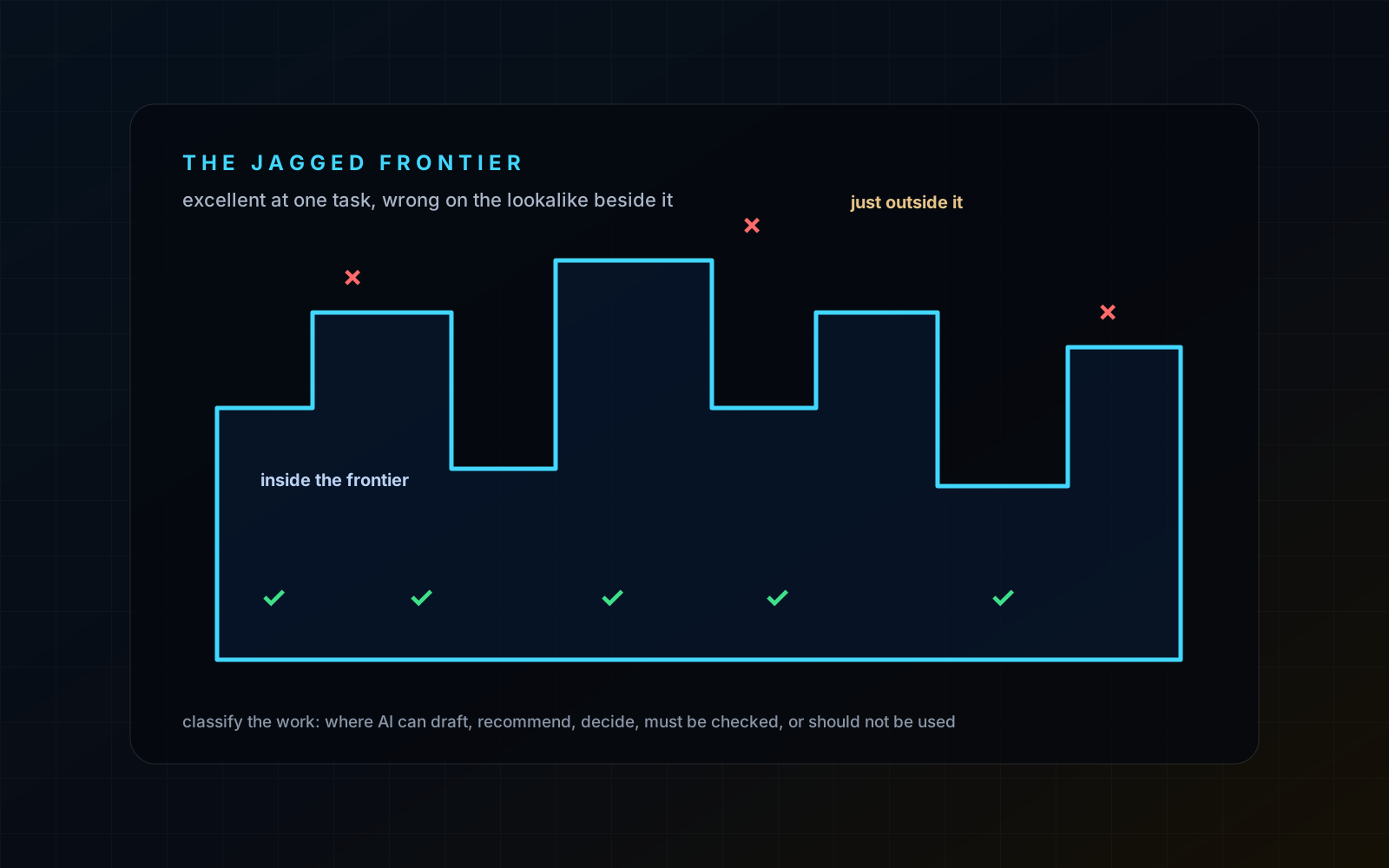
Jagged frontier
AI is a general-purpose technology whose value depends on complementary innovation, the same as electricity and the internet. But it breaks the mold in three ways that change how you manage it: it lands on high-skill work, its barrier to entry is plain language, and it can be brilliant and dead wrong on tasks that look identical.
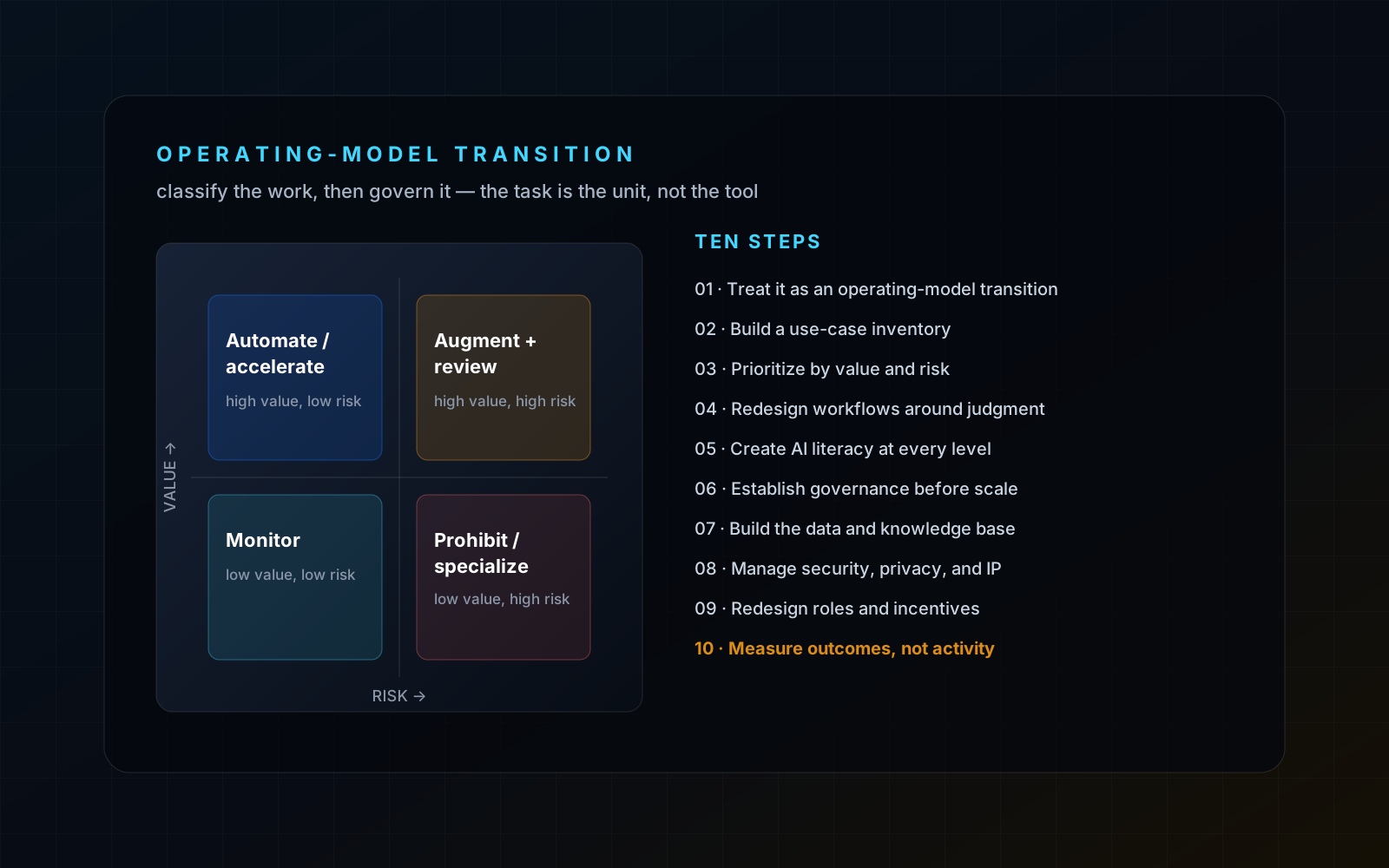
Operating playbook
If AI is an operating-model change rather than a tool rollout, preparation turns into concrete work. Ten steps follow, from making the task the unit of analysis to measuring outcomes instead of activity, and together they turn loose experimentation into governed advantage.
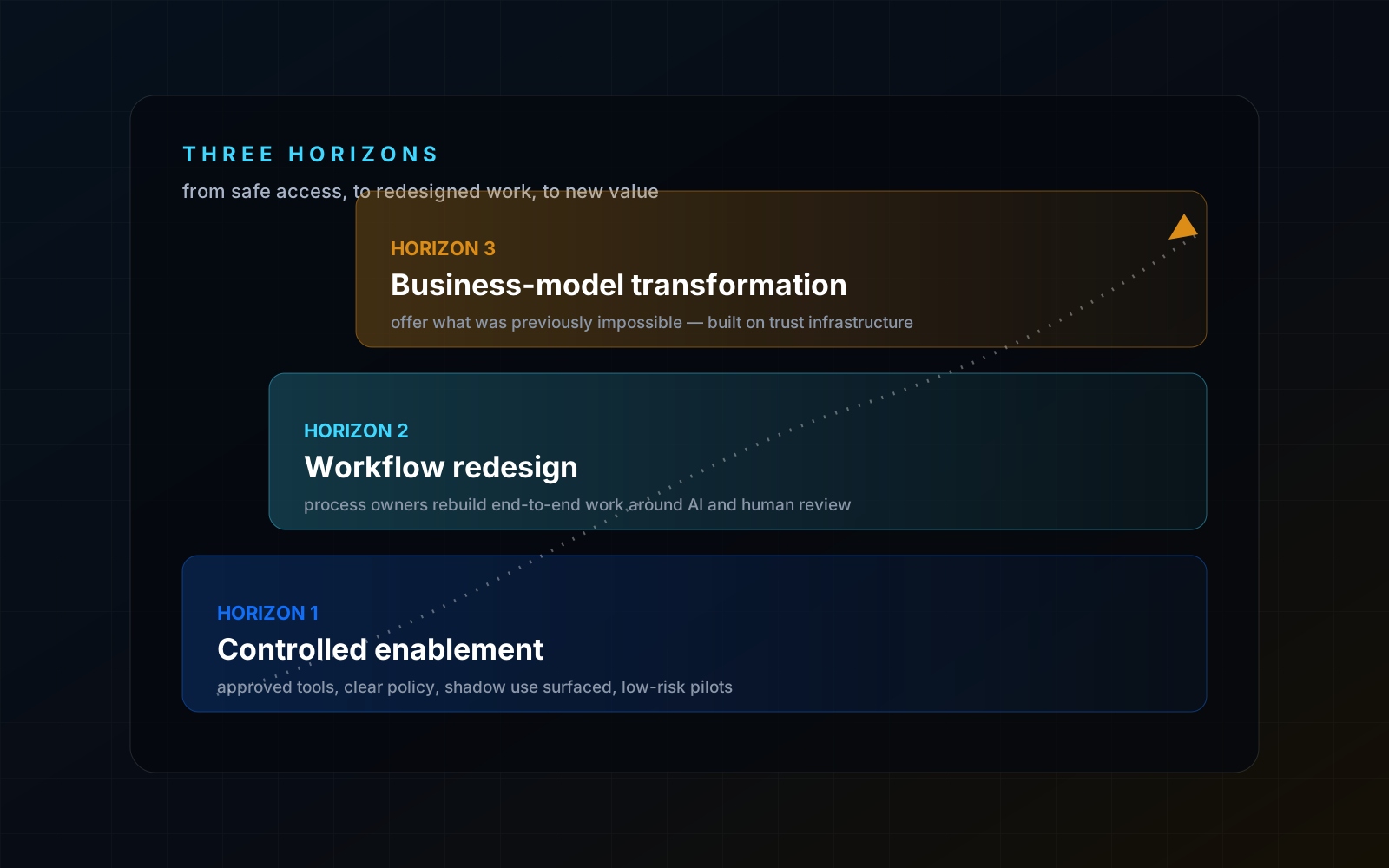
Three horizons
Run the AI transition in three overlapping horizons: controlled enablement, workflow redesign, and business-model transformation. It is the path from safe access to redesigned work to genuinely new value, and it dodges both passivity and reckless acceleration.
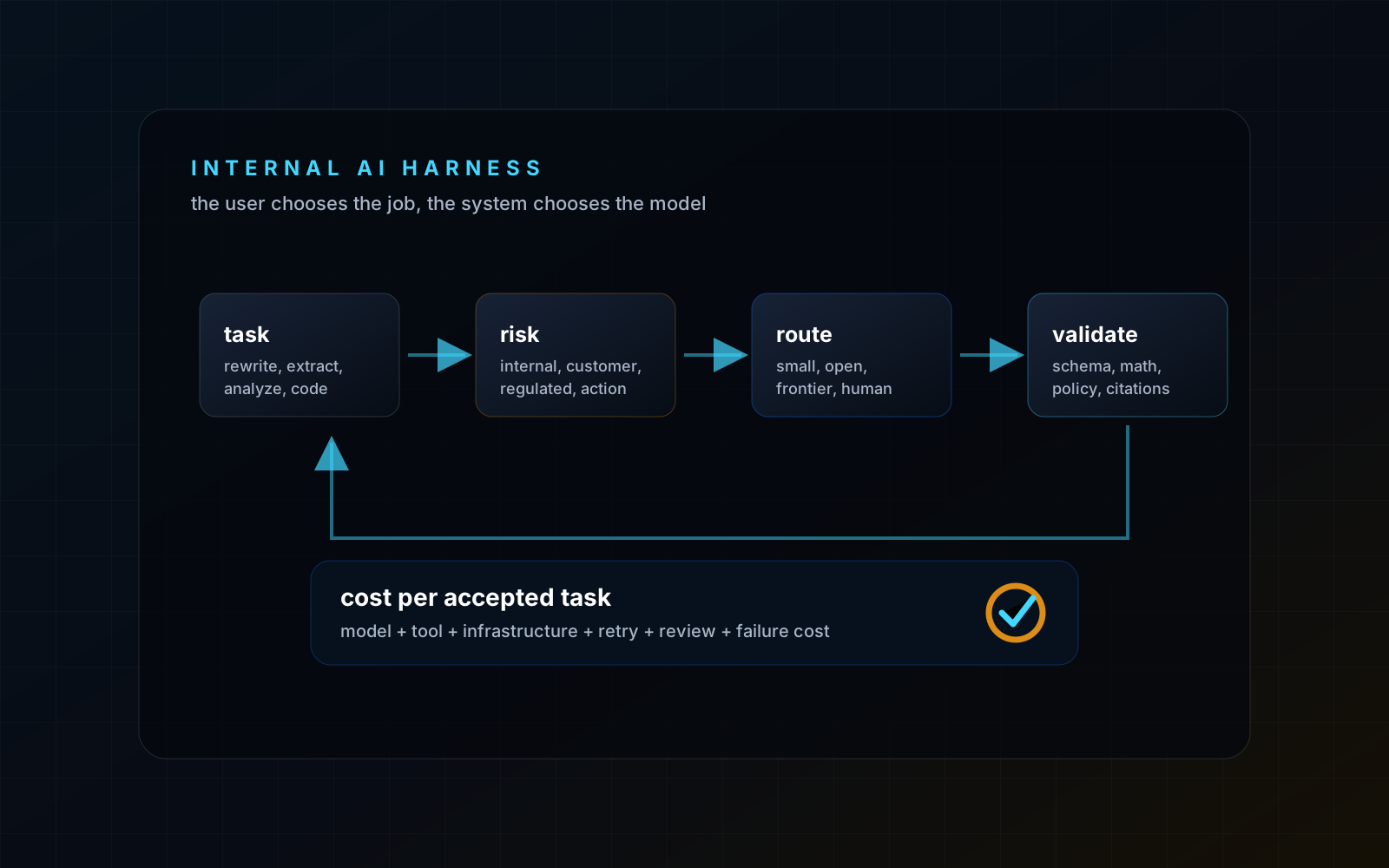
Cost per task
Do not buy model hype. Benchmark the work your company actually does, then route each job to the cheapest model that reliably clears the bar.
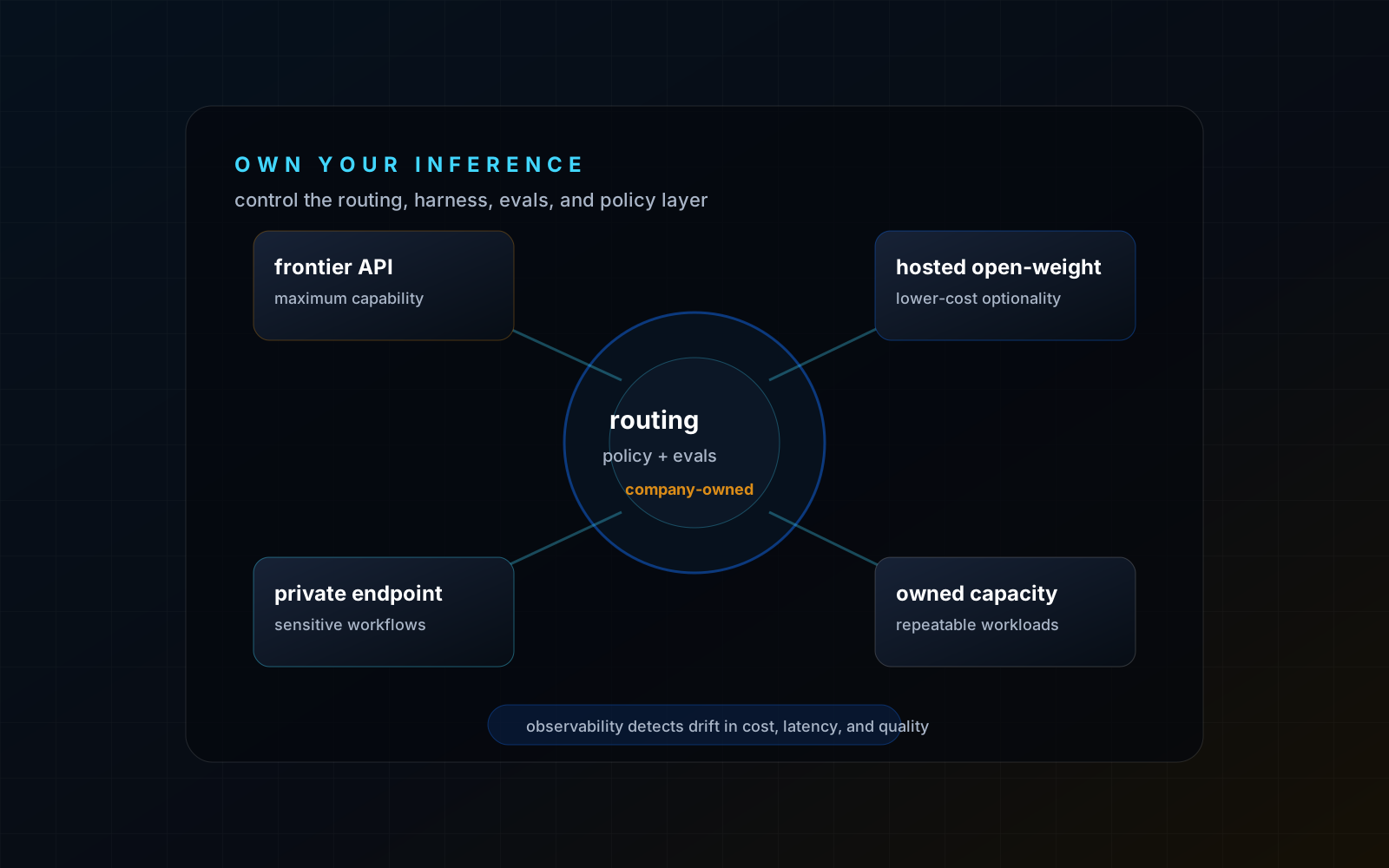
Inference control
Inference is turning into strategic infrastructure. Which API is cheapest is no longer the only question that matters; which parts of the AI stack your company controls matters just as much.
AI operating model
Enterprises need their own internal AI routing layer, not just access to ChatGPT, Claude, Gemini, Cursor, or whatever lab surface is most popular this month.
Planning systems
I do not ask AI to decide. I use it to make ambiguity visible before execution starts.
Signal quality
I spent a week auditing my LinkedIn feed. Everyone posts about AI, and that part is fine. The unsettling part is how identical the posts have started to sound.
Enterprise adoption
Most adoption programs stall because they treat AI literacy as a single skill. It is really a progression, from answers to collaboration to orchestration.
Organization design
As AI commoditizes knowledge, the scarce capability becomes designing, directing, and validating systems of work.
Enterprise architecture
In an AI market that changes monthly, durable advantage comes from systems designed to be replaced.
Selected work
Product and architecture
A production restaurant intelligence product built from scratch: conversational reporting, dashboards, semantic metrics, typed artifacts, and source-backed insights.
Built as a composable multi-agent platform with penny-exact metric reconciliation and merchant-specific inference, so every benchmark is local, relevant, and able to improve over time.
Enterprise search
A find-anything architecture for merchant data using ontology discovery, structured search, aggregation, semantic search, and iterative schema exploration.
Designed to avoid hardcoded field lists and scale across large object schemas without flooding the model context.
No-code agent platform
A visual builder for enterprise agents: connect data, define context, choose reasoning topology, attach tool skills, and publish the result as an accessible headless MCP agent.
Designed so non-engineers can assemble governed agents using the same reusable capability set developed for Merchant Explorer.
Autonomous development agent factory
A structured autonomous development lifecycle where agents plan, build, verify, triage, fix, and ship through gated phases.
Evolved into a repeatable operating model for high-throughput AI-assisted engineering.
Family operating system
A family AI platform where household memory, member context, routines, and home signals combine into one shared operating layer.
Lucky and Clover act as two coordinating agents available through voice or chat, using whole-family context to help with chores, school, shopping, schedules, and connected-home routines.
Agent memory architecture
A memory model that turns onboarding, recalibration, preferences, facts, relationships, and prior interactions into useful future context.
Built around continuity, permission, and practical recall: memories are learned conversationally, reviewed by the user, and connected through graph structure over time.
Voice transcription and multi-voice hub
A local voice workspace for transcription, voice capture, and multi-voice workflows built around Apple Silicon and practical operator use.
Extends AI interaction beyond text into fast local voice workflows and reusable voice infrastructure.
Enterprise AI enablement
A large body of trainings, example skills, prompt patterns, and micro-projects used to help teams adopt AI tooling responsibly.
Delivered repeated live training with practical examples for product, risk, compliance, QA, legal, and commercial teams.
Workflow transformation
A system for turning messy procedures into structured operating playbooks, agent instructions, checklists, and reusable workflows.
Targets the unglamorous but valuable enterprise layer where AI needs policy, steps, approvals, and durable documentation.
Agentic risk operations
An AI coworker for credit risk analysts that reads financial statements, calculates exposure, drafts review memos, and generates leadership summaries.
Designed around auditable workflows for underwriting and portfolio monitoring rather than generic document chat.
Field notes
Layer deterministic tests, behavioral evals, trace review, and repeated hardening loops. The goal is not a permanent benchmark claim; it is a system that makes failures visible and repairable.
Restaurant benchmarks become more useful when they belong to the merchant: local history, local seasonality, local goals, and inference that learns from the actual operating context.
Autonomous development works best as a lifecycle with planning, gates, drift checks, review, and triage. The interesting part is the operating cadence, not the novelty of one agent writing code.
Family and enterprise memory both need review, scope, recalibration, and graph structure. Recall becomes a product surface when users can correct what the system thinks it knows.
Archive material